

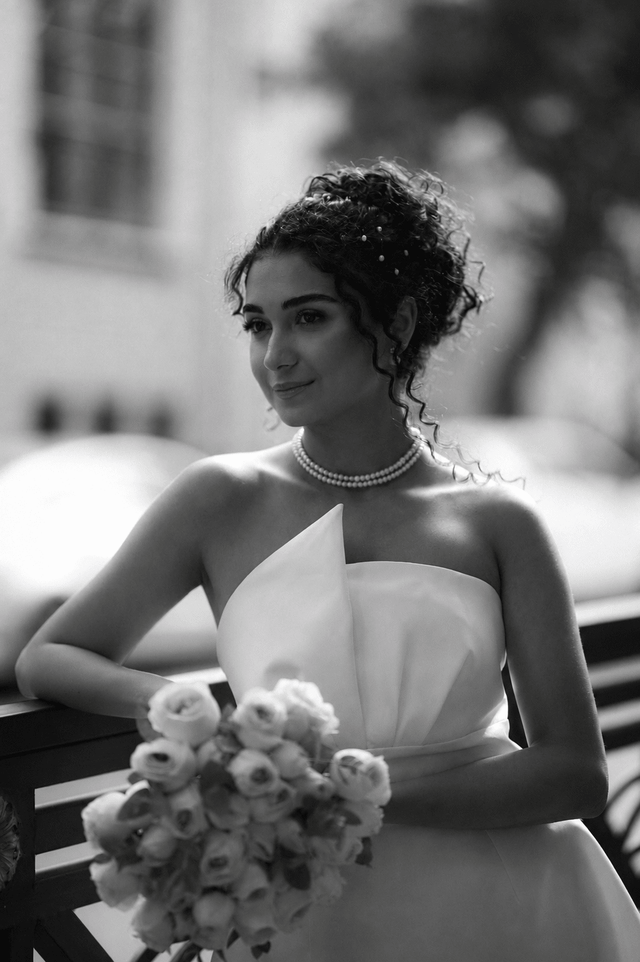
Why Wear Pearls on Your Wedding Day
As the big day approaches, a question keeps coming up for many brides-to-be: do pearls bring bad luck? This belief, widespread as it may be, actually hides a much richer and more beautiful history than a simple superstition. From ancient Greek temples to British royal weddings, and through Indian and Chinese traditions, pearls have accompanied brides for millennia as a symbol of purity, elegance, and legacy.
This journey through cultures and eras helps us understand why pearls remain, even today, one of the most chosen wedding jewels in the world, far from the image of ill omen sometimes associated with them.

Parure given to Empress Marie-Louise of Austria by Napoleon I for their wedding. Delivered in 1810, it included a diadem, a comb, a necklace and a pair of earrings. The latter two are now missing, having been stolen from the Louvre Museum in 2025.
Pearls and marriage: a millennial tradition across cultures
Ancient Greece: Aphrodite's tears of joy
In Greek mythology, pearls hold a special place in the history of love. According to legend, they were born from the tears of joy shed by Aphrodite, goddess of love and beauty. Greek brides then wore pearls on their wedding day as a symbol of marital happiness, hoping their union would be joyful and free of sad tears. This association between pearls and marital joy is one of the oldest written records of the link between this jewel and marriage.

Ancient Rome: a privilege of the aristocracy
Among the Romans, pearls were such a strong symbol of social status that wearing them was reserved for aristocratic classes. Owning and wearing them on important occasions, including weddings, was a way of displaying one's wealth and rank. This association between pearls and social prestige has crossed centuries and partly explains why they have remained a jewel of choice for life's most important ceremonies.
India: the Rani Haar necklace and the legend of Krishna
In India, pearls hold an almost sacred place in nuptial traditions. A legend tells that the god Krishna plucked the very first pearl from the bottom of the sea to offer it to his daughter on her wedding day, cementing pearls as a traditional wedding gift across many Indian communities. Over time, the Rani Haar, a multi-strand pearl necklace worn by queens and noblewomen, became an essential part of the bride's trousseau, symbolizing both elegance, fertility, and marital harmony. In South India, the Satlada, a seven-strand pearl necklace, remains a central piece of traditional weddings, while the city of Hyderabad, which became the world capital of pearl trade under the Nizams, has made pearls a true family heritage passed down from generation to generation rather than a simple fashion accessory.

China: pearls, dragons, and lunar symbolism
In Chinese culture, the pearl symbolizes purity, wisdom, and integrity, but also wealth and good fortune. Its pearly luster traditionally associates it with the moon and yin energy, embodying intuition and receptivity. Chinese folklore establishes a strong link between pearls and dragons, these protective and powerful creatures: according to some myths, pearls would fall from the sky during battles between celestial dragons, symbolizing the union of strength and beauty. Ancient texts like the Shui Jing (the Water Classic) already mention pearls as gifts offered to emperors, proof of their privileged status in Chinese civilization for millennia. In traditional weddings, pearls are associated with the bride's purity and the couple's harmony.
The superstition of tears: myth or reality?
Despite this rich positive history, a belief persists: wearing pearls on one's wedding day brings bad luck, due to their round shape evoking tears. Where does this idea really come from?
This superstition originates from Japanese folklore, where pearls were sometimes associated with tears shed by mermaids and sea nymphs. It was then largely reinforced by Victorian culture in England, which associated pearls with mourning jewelry, worn during periods of sorrow rather than joy.
The paradox is that this belief is much more recent and localized than the ancient Greek tradition, which, on the contrary, associated pearls with a happy and tear-free marriage, or the Chinese tradition, which never associated pearls with misfortune. In other words, the superstition of tears is just one cultural interpretation among others, and not a universally established fact. Therefore, nothing prevents a bride from choosing pearls for what they truly represent throughout history: purity, elegance, and family continuity.
Famous brides who wore pearls
Princess Elizabeth and the narrowly recovered necklace (1947)
On November 20, 1947, Princess Elizabeth, future Queen Elizabeth II, married Prince Philip wearing a two-strand pearl necklace, actually composed of two distinct historic necklaces: one strand of 46 pearls that belonged to Queen Anne, the last Stuart monarch, and a second strand of 50 pearls that belonged to Caroline of Ansbach, Queen Consort of George II. These jewels, whose trace dates back to Queen Victoria's inventory in 1896, are among the oldest ever worn by the British Royal Family. The anecdote has it that these necklaces, displayed with other wedding gifts at St James's Palace, almost didn't arrive in time for the ceremony: the Princess's private secretary had to rush through the crowd on the very day to retrieve them at the last minute.

Jacqueline Kennedy and her pearl choker (1953)
At her wedding to John F. Kennedy in 1953, Jacqueline Bouvier wore a pearl choker, paired with a diamond bracelet given by her future husband, all enhancing her ivory silk gown and lace veil. This simple and timeless choice has remained one of the most iconic images in the history of American bridal fashion.

Grace Kelly and discreet elegance (1956)
At her religious ceremony in Monaco in 1956, the actress who became Princess Grace of Monaco wore pearl earrings, in addition to her wedding ring. A minimalist choice that marked the history of bridal fashion and perfectly illustrates why pearls remain associated with discreet elegance rather than any kind of misfortune.

What pearls symbolize for a bride today
Beyond history and superstitions, pearls retain strong significance for the wedding day: purity, wisdom, and integrity. Their soft, natural luster has the unique ability to complement any dress, without ever overshadowing the outfit or going out of style from one season to the next.
It is also a piece of jewelry that crosses generations, making it a natural candidate for embodying the "something old" from the famous English nursery rhyme "something old, something new, something borrowed, something blue". This tradition, born in Lancashire during the Victorian era, originally aimed to protect the bride and her future offspring; today, it is primarily an opportunity to wear a meaningful piece, often passed down by a mother or grandmother. A pearl necklace given, inherited, or intended to be passed on in turn naturally ticks this box, while also being able to match the "something new, borrowed, or blue."
How to choose and wear your pearls for your wedding
The choice of necklace length primarily depends on the neckline of the dress. For a strapless or off-the-shoulder dress, a choker (approximately 40cm) highlights the collarbone and décolletage, much like Jacqueline Kennedy's choice. For a dress with straps or a more covered neckline, a princess (45cm) or matinee (50cm) length is generally more flattering. For those who wish to draw inspiration from the Indian traditions of the Rani Haar, several superimposed strands of pearls create a more spectacular effect, ideal for an evening ceremony or reception. Find all the details on how to measure and choose the ideal length in our complete guide to necklace lengths.
For those who, like Grace Kelly, prefer discretion, a simple pair of pearl earrings can suffice to add that touch of timeless elegance without overpowering the outfit.
At NEIJE, our white pearl necklaces are handmade in Paris with natural freshwater cultured pearls: a choice that is both timeless, responsible, and true to centuries of tradition, for the most important day of your life.

FREQUENTLY ASKED QUESTIONS
Do pearls really bring bad luck on a wedding day?
No, this is a superstition of Japanese and Victorian origin, linked to the round shape of pearls evoking tears. Ancient Greek tradition, on the contrary, associated pearls with a happy marriage, born from Aphrodite's tears of joy, and Chinese culture never attributed this negative connotation to them. It is one cultural belief among others, not an established fact.
Why are pearls traditionally associated with weddings?
Pearls have symbolized purity, wisdom, and integrity since antiquity. In Rome, they were reserved for the aristocracy and symbolized social status, making them a privileged jewel for important occasions like weddings.
What role do pearls play in traditional Indian weddings?
Pearls hold an almost sacred place in Indian nuptial traditions, embodied by the Rani Haar, a multi-strand necklace worn by brides, or the Satlada with seven strands in South India. A legend even says that the god Krishna offered the very first pearl to his daughter for her wedding.
What do pearls symbolize in Chinese culture?
In Chinese culture, pearls represent purity, wisdom, and good fortune. Their luster associates them with the moon and yin energy, and folklore connects them to dragons, protective creatures, making them a strong symbol for the bride's purity and the couple's harmony.
Which famous brides wore pearls on their wedding day?
Princess Elizabeth (future Queen Elizabeth II) wore a two-strand pearl necklace in 1947 that belonged to Queen Anne and Caroline of Ansbach. Jacqueline Kennedy wore a pearl choker in 1953, and Grace Kelly wore pearl earrings at her wedding in Monaco in 1956.
Can a pearl necklace replace the traditional "something old"?
Yes. A pearl necklace passed down in the family or intended to be worn for generations perfectly matches this tradition born in Lancashire during the Victorian era, in addition to being able to harmonize with the "something new, borrowed, or blue."
What length of pearl necklace should you choose according to your wedding dress?
For a strapless or off-the-shoulder dress, opt for a choker of about 40cm which highlights the décolletage. For a dress with straps or a more covered neckline, a princess (45cm) or matinee (50cm) length is generally more flattering.