

Why Pearls Are the New Luxury
Pearls aren't making a comeback. They never left. For several years, pearls have been presented as a major return. There has been talk of a renaissance, of the Pearlcore trend, of the pearl necklace making a comeback, and of a renewed enthusiasm from luxury houses. However, this interpretation is incomplete. Pearls have never truly left the world of jewelry. They have traversed decades, artistic movements, and fashion evolutions with remarkable discretion. If they now occupy a more visible place in the collections of the greatest houses, it is not because they have become desirable again. It is because our definition of luxury has changed.
For several years, a profound transformation has been taking place in the world of fashion and jewelry. Consumers are less focused on overt displays of wealth than before. They are more interested in the quality of materials, craftsmanship, the history of an object, and the emotion it evokes. Luxury is no longer just about rarity. It's about meaning. In this new landscape, pearls occupy a unique position. They don't just captivate with their luster. They tell a story. Time. Nature. Life. Craftsmanship. These are all values that resonate with new force today. So it's not the pearl that has changed. It's our perception of it.
Why are major luxury houses placing pearls back at the heart of their creations?
When the same material reappears simultaneously in the collections of several houses, it is rarely a simple passing trend.
Major luxury houses observe cultural developments several years in advance. They don't follow trends: they identify aspirations that are becoming firmly established in society.
This is precisely what explains the growing prominence of pearls today.
At Chanel, the pearl has been part of the house's identity since Coco Chanel, who freed it from the strict codes of aristocracy by associating it with modern and accessible silhouettes. Later, Karl Lagerfeld would make it one of his signatures, playing with both classic pearls and bolder volumes.
At Dior, pearls interact with contemporary high jewelry. They are no longer solely used as traditional elements, but as true creative materials, capable of bringing softness, contrast, and modernity to the most sophisticated compositions.
Mikimoto, considered the world reference for cultured pearls, continues to demonstrate that pearls can achieve the highest levels of excellence while remaining profoundly natural.
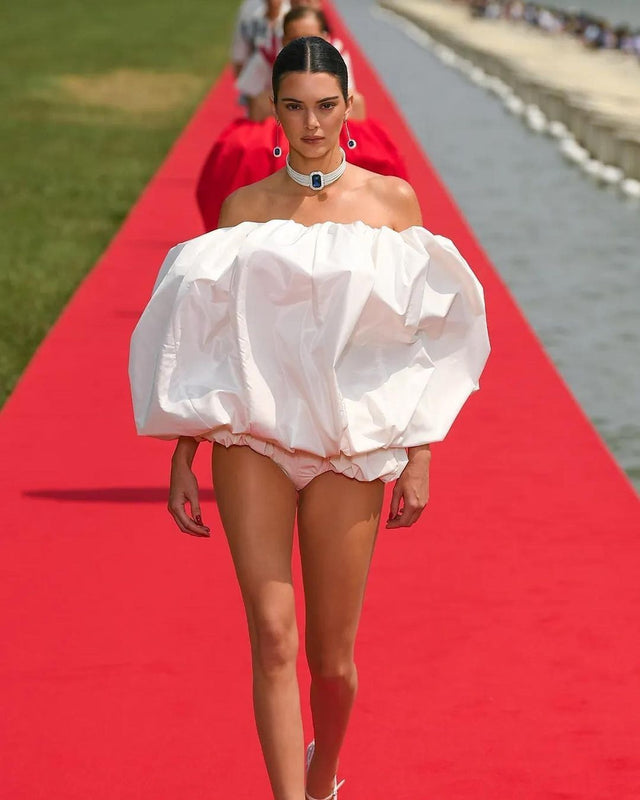
More recently, designers like Jacquemus are giving them a new interpretation. Pearls are integrated into a minimalist, sunny, and Mediterranean aesthetic, far from the classic image long associated with them.
These houses don't tell exactly the same story. But they all come to the same conclusion. The pearl is no longer a legacy. It is becoming a material of the future. And if so many designers are exploring it today, it's not because they are trying to revive the past. It's because they see it as one of the most accurate expressions of contemporary luxury.
| NEIJE's perspective
Major luxury houses are not bringing pearls back into fashion out of nostalgia. They reflect a deeper evolution: the desire to rediscover natural materials, meaningful objects, and an elegance that no longer depends on ostentation. |

Why do pearls so perfectly meet the expectations of contemporary luxury?
If the biggest luxury houses are reinterpreting pearls today, it's not just because they offer new aesthetic possibilities. It's because they embody, almost naturally, the qualities that consumers are now seeking. For a long time, the value of a piece of jewelry rested mainly on the rarity of its materials or the display of its prestige. Today, these criteria remain important, but they are no longer sufficient. We also want to understand what we wear. Where does this material come from? How was it crafted? Why is this piece of jewelry different from another? In a few years, luxury has become more curious, more sensitive, and more attentive to the stories hidden behind objects. Pearls perfectly respond to this evolution.
A material shaped by time rather than by man
There is a fundamental difference between a pearl and most other gemstones. A diamond is mined. An emerald is cut. A pearl, on the other hand, forms slowly. It is the result of a natural process that requires time, patience, and a fragile balance between living organisms and their environment. It is this origin that makes it so special. When you observe a pearl, you don't just see a precious material. You discover the result of a natural phenomenon that man accompanies but never fully controls.
In an era where we are increasingly questioning the origin of materials, their authenticity, and the expertise that creates them, this story takes on new importance. The pearl doesn't just charm with its appearance. It also charms with what it represents.
| Did you know?
Unlike precious stones that are cut to reveal their brilliance, the beauty of a pearl is the result of its natural growth. Its luster, shape, and nuances develop gradually over time, making each pearl a truly unique creation. |
Imperfection has become a new form of elegance
For decades, jewelry celebrated perfection. Perfectly calibrated stones. Invisible settings. Symmetrical lines. This pursuit of precision remains at the heart of fine craftsmanship. But our perspective is evolving. Today, we are also sensitive to what makes a piece unique. A vein in a piece of marble. The irregularities of handmade ceramics. The grain of solid wood or the free forms of a baroque pearl. What was once considered a flaw is now becoming a signature. Pearls perfectly illustrate this evolution. No two are exactly alike; their shape, luster, and nuances tell a unique story. It is precisely this singularity that now attracts both designers and lovers of beautiful jewelry.
More than a material, an emotion
Major luxury houses never choose a material solely for its technical qualities. They also choose what it is capable of evoking. Pearls possess a rare power. They immediately bring to mind the sea, light, travel, nature, or even vacation memories. They evoke something profoundly calming. This emotional dimension has become essential. Contemporary luxury no longer seeks solely to impress. It seeks to create a lasting connection between an object and the person who wears it. It is undoubtedly for this reason that pearls now find their place in very different creations. They can be spectacular in high jewelry. But they are just as fitting in a minimalist bracelet or a necklace worn daily. Their strength lies precisely in their ability to cross styles, generations, and uses without ever losing their identity.
| NEIJE's perspective
The most beautiful jewels are not always those that immediately catch the eye. They are often those we continue to wear years later, because they tell a story, evoke a memory, or reflect a way of being. Pearls possess this silent elegance that transcends time without ever losing its power. |
Pearls offer designers a freedom that no other gemstone possesses
If pearls occupy such an important place in the collections of the greatest houses today, it is not only because they are beautiful. It is because they offer exceptional creative freedom. Unlike a diamond or a sapphire, whose value largely depends on precise criteria of cut, clarity, or color, pearls impose no single rule. A perfectly round pearl can be sought after for its classic elegance. A baroque pearl, with its free and irregular shapes, can become the centerpiece of a contemporary creation. The same material can thus express totally different universes. This diversity explains why pearls attract designers so much today. They offer an almost infinite field of expression.

One pearl, four visions of luxury
What's fascinating when observing the collections of major houses is that each tells a different story with the same material.
At Chanel, the pearl remains inseparable from timeless elegance. Inheriting Coco Chanel's vision, the house continues to play with proportions, accumulations, and contrasts, making the pearl an element that is both modern and iconic.
At Dior, it interacts with high jewelry. Pearls are seen alongside precious stones, sophisticated settings, and sculptural creations that demonstrate they can be as spectacular as the rarest gems.
Mikimoto, pioneer of the cultured pearl, pursues another quest: that of absolute excellence. The house highlights the exceptional quality of its pearls and reminds us that they are among the noblest materials in jewelry.
Conversely, Jacquemus embraces pearls with a more minimalist and Mediterranean approach. They become contemporary, luminous, almost spontaneous details, capable of accompanying both a summer silhouette and a more urban wardrobe.
Four houses. Four sensibilities. One material. This diversity shows that pearls no longer dictate a style. They adapt to all styles.
| Did you know?
Pearls are now featured in both high jewelry collections and ready-to-wear runway shows. This cross-sectional presence is rare: few materials manage to traverse the worlds of luxury, fashion, and contemporary jewelry with such natural ease. |
Coco CHANEL

Pearls are no longer associated with one generation
For a long time, pearls suffered from a very codified image. They were readily associated with family heirlooms, grand occasions, or a certain idea of classicism. Today, this perception is largely a thing of the past. Designers associate them with gold, silver, steel, leather, or natural stones. They play with volumes, asymmetries, and contrasts. Pearls are no longer confined to a single category. They become a language. It is precisely this freedom that appeals to new generations. One person might choose a pearl bracelet for its discreet elegance. Another might see a connection to nature. A third will simply appreciate its minimalist aesthetic. There is no longer one single way to wear pearls. And that is probably their greatest strength.
Pearls have ceased to be a symbol.
They have become a field of expression, and it's perhaps the most important transformation. For centuries, pearls represented social status, tradition, or heritage. Today, they primarily express a personality. Designers no longer use them to recall the past. They use them to imagine the future. They experiment. They mix materials. They reinvent proportions. They disrupt codes. The pearl then becomes much more than a gemstone. It becomes a creative material. And it is undoubtedly this freedom that explains why it holds such an important place in contemporary luxury today. Houses are not rediscovering pearls; they are rediscovering everything they can convey.
What this evolution changes in how we choose jewelry
Trends come and go. Tastes evolve. Collections renew each season. But some materials stand the test of time with surprising ease. Pearls are one of them. What's changing today isn't their value, but how we perceive them. For a long time, many chose jewelry for its social representation. Today, we choose it more for the story it tells. We seek authentic materials. Objects with a history. Creations that can accompany us for a long time rather than following an ephemeral trend. This evolution explains why pearls now appeal to a much wider audience than twenty years ago. They are no longer reserved for a ceremony, a generation, or a particular way of dressing. They naturally find their place in everyday life. With a linen shirt. A white t-shirt. A denim jacket. Or a perfectly tailored suit. They provide a subtle presence. Never overpowering. It is precisely this simplicity that makes them contemporary.
Perhaps the new luxury simply means choosing meaningful objects
Major luxury houses have understood this. So have designers. But this evolution goes far beyond the runways. It concerns each of us. Choosing a piece of jewelry today is no longer just about selecting a shape or a color. It's often about choosing a material. A story. Craftsmanship. An emotion. Pearls naturally meet this demand. Because they come from living organisms. Because they are all different. Because they embody the time required for their formation. They remind us that a beautiful object does not derive its value solely from its rarity. It also derives it from what it tells. In a world where everything seems to move faster, pearls embody another idea of luxury. A calmer luxury. More sustainable. More sincere.
Pearls never disappeared.
They simply waited for our perspective to evolve. Long perceived as a symbol of tradition, they now embody a much more contemporary vision of luxury: a luxury that favors natural materials, craftsmanship, emotion, and durability over ostentation. This is precisely what explains their presence in the collections of the biggest houses. Chanel reinterprets them with freedom. Dior sublimates them in high jewelry. Mikimoto continues to make them an expression of exceptional savoir-faire. Jacquemus offers them a sunny modernity. All tell a different story. But all reflect the same evolution. Pearls are no longer just jewelry. They have become the symbol of a new way of conceiving luxury. A luxury that no longer seeks solely to impress. A luxury that seeks above all to create meaning. And it is perhaps this ability to transcend eras while remaining profoundly current that makes pearls one of the most fascinating materials in contemporary jewelry.
NEIJE's Vision
If pearls continue to fascinate the biggest luxury houses, it's not just because they are beautiful. It's because they tell a story.
We design bracelets, necklaces, and jewelry that transcend trends with the same timelessness that pearls transcend generations. Creations designed to be worn for a long time. To accompany everyday moments as much as the precious memories they create. Because a piece of jewelry should never be chosen solely because it is fashionable. It should be chosen because it continues to reflect us when trends have faded. Perhaps this, ultimately, is the most beautiful definition of luxury.

Frequently Asked Questions
Why have pearls become popular again in luxury?
Pearls meet the new expectations of contemporary luxury: authenticity, craftsmanship, natural materials, and timeless elegance. Today, major houses use them to create jewelry that tells a story as much as it expresses a style.
Why do luxury houses use pearls so much?
Because pearls offer great creative freedom. They can be classic, contemporary, minimalist, or sculptural. Their natural and unique character allows designers to imagine very different pieces of jewelry while maintaining a strong identity.
Are pearls still trendy?
Yes, but their success goes far beyond trends. While the Pearlcore movement has helped bring pearls back into the spotlight, they are primarily appealing because they embody lasting values: authenticity, elegance, and timelessness.
Why are pearls so popular today?
Because our relationship with luxury is evolving. Consumers are increasingly looking for objects that carry meaning, are made with natural materials, and can stand the test of time. Pearls naturally meet these expectations.
Do men also wear pearl jewelry?
Yes. Pearl bracelets and necklaces are now part of the collections of many luxury houses and appeal to a growing number of men. Paired with materials like silver, onyx, or lava stone, they provide a discreet and contemporary elegance.
Why do pearls embody new luxury?
Because they bring together all the qualities sought after in luxury today: a natural origin, artisanal craftsmanship, a unique identity, a strong emotional dimension, and an elegance that transcends trends without losing its modernity.